

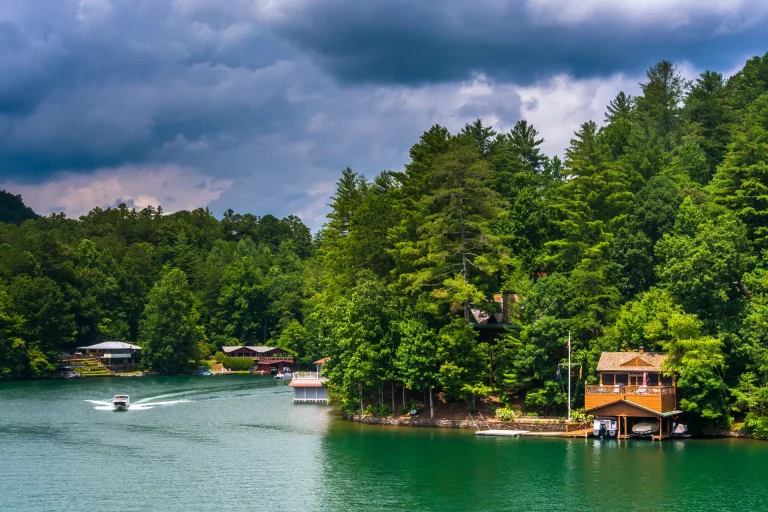
The sizzling summer heat returned at full blast meaning Georgia’s rivers, lakes, streams, and beaches are as busy as they’ll be all year. Whether fishing on one of the state’s pristine mountain lakes, floating the Chattahoochee, or taking a morning stroll along the coast at Tybee Island, there is no shortage of opportunities to enjoy the water this time of year.
What many people don’t realize, however, is Georgia’s waterways frequently intersect with private property. Rivers and streams often pass through or border residential land. Private ponds can become the source of neighbor disputes. Lakefront owners regularly encounter questions about docks, fishing access, and recreational use. Even beachfront property owners may be surprised to learn where their rights end and the public’s begin.
For property owners, understanding those distinctions can help avoid unnecessary disputes and costly misunderstandings. Here are four common myths Georgia property owners should know before heading into peak summer recreation season.
Myth #1: “I’ve always used the pond next door, so I have the right to keep using it.”
Private pond disputes often arise when neighbors, friends, or previous property owners have allowed informal access over the years. A common assumption is long-term use automatically creates a permanent right to continue using the pond.
In reality, the answer is often more complicated. Whether someone has a legal right to access a private pond may depend on factors such as property records, boundary lines, easements, prior agreements, or other rights associated with the land.
The key takeaway is neither side should rely on assumptions. Property owners should understand what rights may already exist before restricting access and longtime users should not assume years of informal use automatically create a permanent right to continue using a private pond.
Myth #2: “If a river runs through my property, I can control who uses it.”
If a waterway is legally navigable, members of the public may have the right to travel through it by boat, kayak, canoe, raft, or other watercraft.
What they typically cannot do is access the water by crossing private property without permission. They also cannot simply pull onto private land along the shoreline and treat it as public space.
For property owners, this distinction is important. While you may not be able to stop people from floating through a navigable waterway, you can generally protect your private property from trespass.
Myth #3: “People can’t swim or fish near my dock if I don’t want them there.”
Many waterfront property owners assume ownership of a dock gives them control over the surrounding water as well. In reality, the answer often depends on whether the water itself is public or privately owned.
Generally speaking, if a lake or waterway is open to public use, people may be allowed to boat, fish, swim, or paddle near a private dock, provided they remain in the water and do not use the dock itself without permission.
The dock is often treated differently than the water surrounding it. While a dock may be private property, that does not automatically give the owner the right to exclude others from otherwise lawful use of the adjacent water.
Myth #4: “If I own beachfront property, I own the entire beach.”
Not quite. Many beachfront owners are surprised to learn portions of the beach remain open to public use, even when a private residence sits directly behind it.
While property owners can generally prevent people from crossing private land to reach the beach, that doesn’t necessarily prevent public access altogether. Many coastal communities provide designated public access points and walkways that allow visitors to reach the shoreline without crossing private property. As a result, portions of the beach itself may remain available for public use even when homes sit directly behind them.
The exact boundaries can vary depending on location and circumstances, but beachfront ownership is often more limited than people assume.
Putting It All Together
Waterfront property can be one of the most enjoyable features of owning real estate in Georgia. It can also create unique legal questions that many owners do not anticipate until a dispute arises.
Before assuming you can exclude others—or before assuming you have the right to use a neighboring body of water—it is worth understanding how the law treats different types of waterways. A little due diligence today can help prevent a much larger dispute tomorrow.
To learn more about how our attorneys help property owners navigate real estate disputes and protect their property rights, click here.